
Safety Plan Worksheet
A structured plan to keep yourself safe during moments of crisis. Fill it out now, so it's ready when you need it.
A structured plan to keep yourself safe during moments of crisis. Fill it out now, so it's ready when you need it.
What thoughts, feelings, situations, or behaviors tell you that a crisis may be developing?
What internal experiences signal you're entering a danger zone?
Strategies you can use without contacting anyone | to distract, self-soothe, or ride out the crisis.
People who can help distract, support, or simply be present with you during a difficult time.
Professionals and crisis services available 24/7.
Some are pre-filled | add any others relevant to you.
Reducing access to means of harm during a crisis is one of the most effective safety measures.
Consider removing or securing items that could be used for self-harm. This could mean asking someone to hold onto certain items temporarily.
When you're not in crisis, write down the people, things, dreams, and reasons that matter to you. These can be hard to remember during dark moments | having them written down helps.
A safety plan is a prioritized list of coping strategies and sources of support that you can use during or before a suicidal crisis. It was developed by Dr. Barbara Stanley and Dr. Gregory Brown and is one of the most widely recommended crisis intervention tools in clinical practice.
Research published in JAMA Psychiatry found that safety planning significantly reduces suicidal behavior | participants who completed a safety plan were 43% less likely to engage in suicidal behavior in the following six months compared to those who received standard care alone.
The power of a safety plan is that it's created when you can think clearly, so it's available when you can't. During a crisis, cognitive constriction (tunnel vision) makes it extremely difficult to think of alternatives or remember resources. A pre-made plan bypasses this by giving you concrete, ordered steps to follow.
This worksheet is not a substitute for professional crisis support. If you are in immediate danger, please call 911 or go to your nearest emergency room. If you are experiencing suicidal thoughts, call or text 988 (Suicide & Crisis Lifeline) or text HOME to 741741 (Crisis Text Line).
Complete this with support if possible. If you have a therapist, complete this worksheet together. If not, consider having a trusted friend or family member nearby.
Be specific. Write actual names and phone numbers, not 'a friend.' During a crisis, you need to be able to act immediately without having to think about who to call.
Keep it accessible. Export this as a PDF and save it to your phone. Print a copy. Give a copy to someone you trust. The plan only helps if you can find it when you need it.
Review and update regularly. Life changes | new relationships, new therapists, moving to a new area. Update your safety plan at least every few months.
If you are in crisis right now: Call or text 988 (Suicide & Crisis Lifeline), text HOME to 741741 (Crisis Text Line), or call 911. You deserve help, and help is available.
A safety plan is a structured document created in advance that lists your personal warning signs, coping strategies, social supports, professional contacts, and crisis resources. It's designed to guide you through a suicidal crisis when it's hard to think clearly.
No. Safety plans have replaced no-harm contracts in most clinical settings because research shows they are more effective. A safety plan provides concrete steps to take, while a no-harm contract is simply a promise. Having actionable steps is far more helpful during a crisis.
Anyone who experiences suicidal thoughts, has a history of suicidal behavior, or wants to be prepared for potential crises. It's also commonly completed as part of therapy for depression, PTSD, and other conditions. You don't need to be in crisis right now to benefit from having a plan.
Yes. Sharing your safety plan with at least one trusted person (partner, friend, family member, therapist) means someone else knows what to watch for and how to help. Give them a copy and talk through it together.

Seedlit provides a private, gentle space for daily journaling and mood tracking. If you're working through difficult times, daily reflection can help.

Available on iOS. Android coming soon.
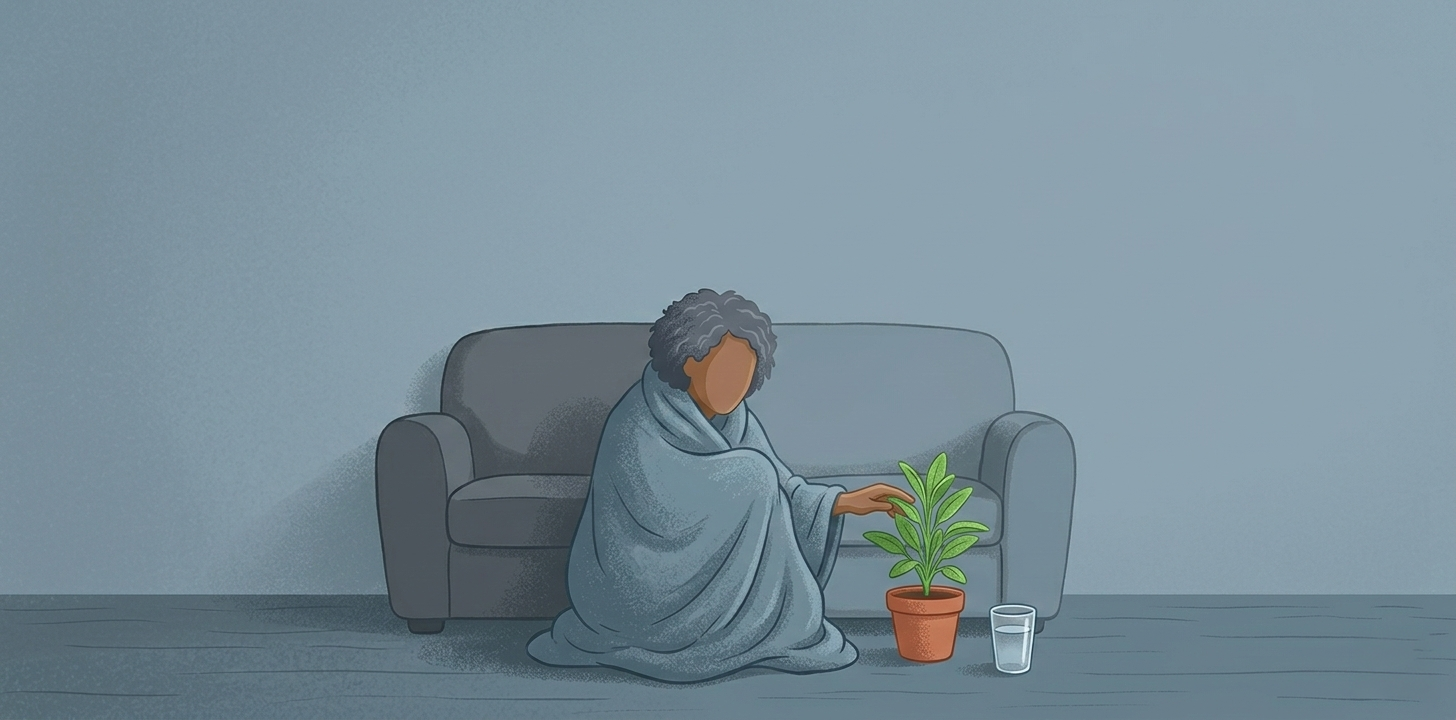
A gentle, structured approach to understanding depression and building small coping steps.
→
Build a personalized toolkit of healthy strategies across physical, mental, social, and creative categories.
→
Anchor yourself in the present moment with the 5-4-3-2-1 sensory grounding exercise.
→