
5-4-3-2-1 Grounding Worksheet
When anxiety pulls you into your head, this sensory grounding exercise brings you back to the present moment.
When anxiety pulls you into your head, this sensory grounding exercise brings you back to the present moment.
Take a slow breath. Notice where you are right now. You're safe enough to do this exercise.
Look around you. Name five things you can see right now. Be specific.
Reach out and touch four different textures. Notice how each one feels.
Close your eyes for a moment. What sounds can you hear?
Breathe in. What scents do you notice? If nothing is immediately obvious, bring something close to smell.
What can you taste right now? Take a sip of water or notice the taste already in your mouth.
Take another slow breath. Check in with yourself.
The 5-4-3-2-1 grounding technique is a sensory awareness exercise widely used in trauma therapy, anxiety treatment, and crisis intervention. It works by redirecting your attention from anxious thoughts to your immediate physical environment through your five senses.
When anxiety or panic occurs, the brain's threat-detection system (the amygdala) activates the fight-or-flight response. Grounding techniques work by engaging the prefrontal cortex | the part of the brain responsible for rational thought | which helps calm the amygdala's alarm. By deliberately focusing on sensory input, you activate neural pathways that compete with and reduce the anxiety response.
This technique is recommended by the National Alliance on Mental Illness (NAMI) and is used by therapists, first responders, and crisis counselors worldwide. It can be used anywhere, anytime, and requires no special tools.
Use it when anxiety spikes. This exercise is designed for moments of acute anxiety, panic, dissociation, or overwhelming emotion. Don't wait | start the exercise as soon as you notice distress rising.
Go slowly. The point isn't to rush through the list. Spend time on each sense. Really look at what you see. Really feel what you touch.
Be specific. Instead of 'I see a wall,' try 'I see a white wall with a small crack near the top left corner.' Specificity demands more attention, which is what makes grounding work.
Rate before and after. Tracking your distress level helps you see that the exercise actually works, which builds confidence in using it next time.
If you are in crisis, please call or text 988 (Suicide & Crisis Lifeline) or text HOME to 741741 (Crisis Text Line).
The 5-4-3-2-1 grounding technique is a sensory awareness exercise that helps manage anxiety, panic, and dissociation. You identify 5 things you can see, 4 things you can touch, 3 things you can hear, 2 things you can smell, and 1 thing you can taste. This anchors you in the present moment.
Yes. Research supports sensory grounding as an effective technique for reducing acute anxiety and panic symptoms. It works by engaging the prefrontal cortex, which helps regulate the amygdala's fight-or-flight response. It's recommended by NAMI and widely used in clinical practice.
Use it whenever you feel anxiety rising, during a panic attack, when experiencing flashbacks or dissociation, or any time you feel disconnected from the present moment. It's most effective when used early | before anxiety reaches its peak.
Yes. One of the strengths of 5-4-3-2-1 grounding is that it requires nothing but your five senses. You can use it in a meeting, on public transport, in bed, or anywhere else.

Seedlit helps you check in daily with guided journaling prompts and mood tracking. Free on iOS.

Available on iOS. Android coming soon.

Build a personalized toolkit for managing anxiety triggers, symptoms, and coping strategies.
→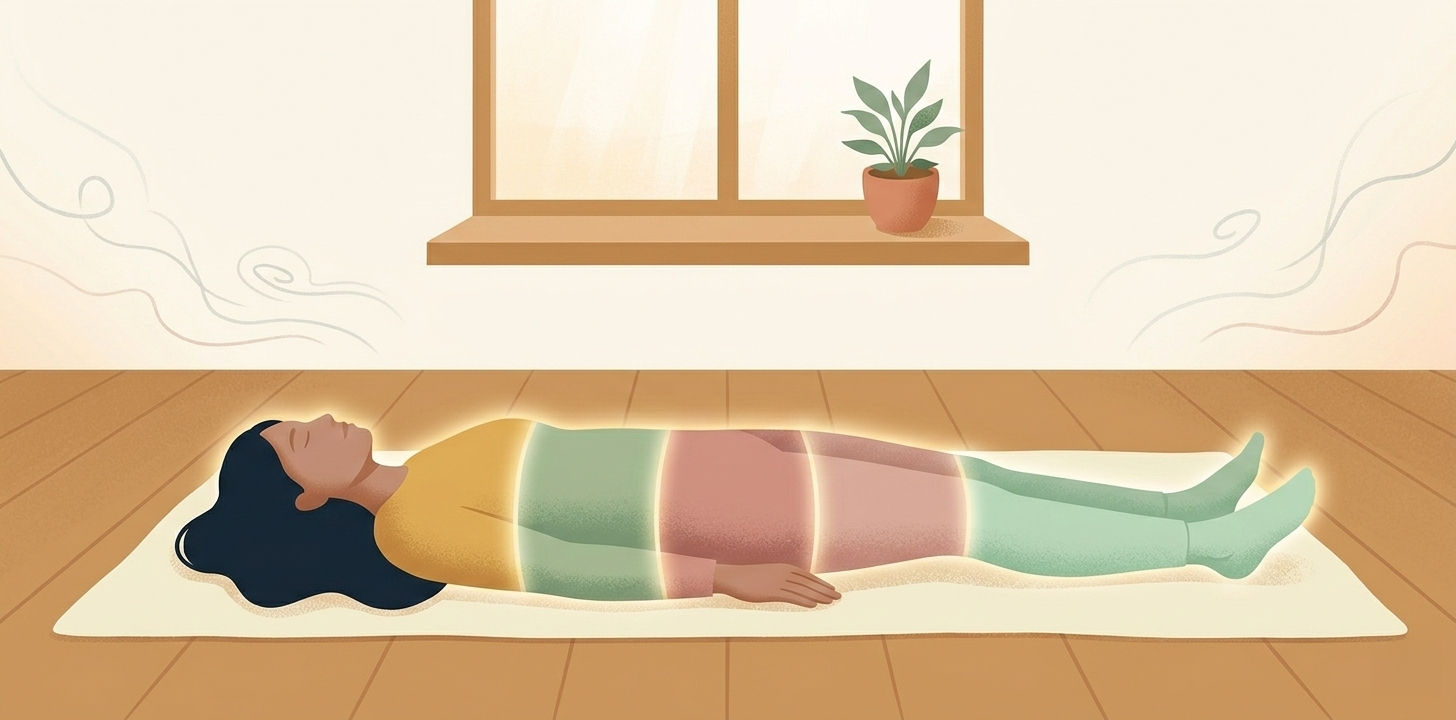
Tune into your body with a guided interactive scan that maps sensations and builds awareness.
→
Build a personalized toolkit of healthy strategies across physical, mental, social, and creative categories.
→