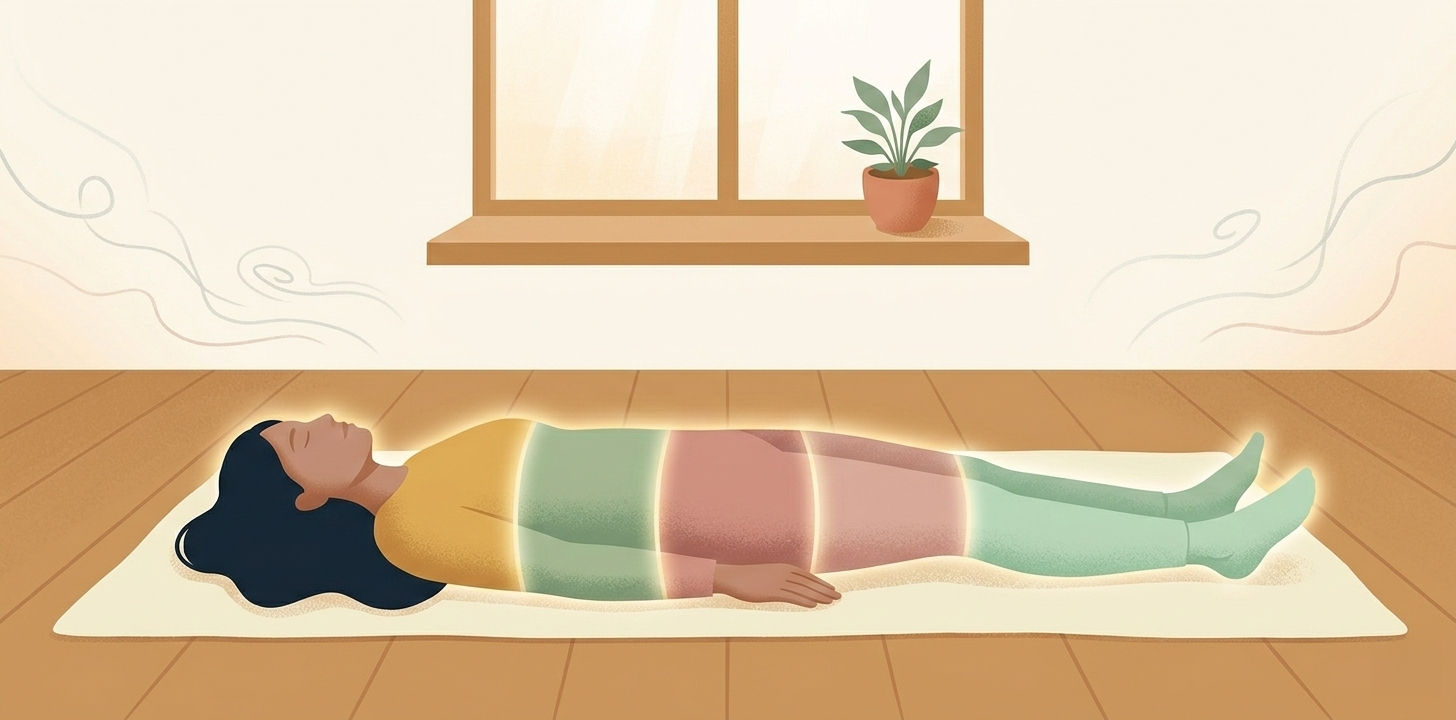
Body Scan Mindfulness Worksheet
Tune into your body's signals with a guided interactive body scan. Map sensations, release tension, and build mind-body awareness.
Tune into your body's signals with a guided interactive body scan. Map sensations, release tension, and build mind-body awareness.
Find a comfortable position | sitting or lying down. Take three slow, deep breaths before starting.
Select a sensation type, then tap each body area to record what you notice. Move slowly from head to feet. There's no wrong answer | simply notice.
Choose one area that needs the most attention and spend a moment breathing into it.
Imagine your breath flowing directly to this area. Does anything shift?
Take a moment to check in with your overall state after completing the body scan.
The body scan is one of the foundational practices in mindfulness-based stress reduction (MBSR), developed by Dr. Jon Kabat-Zinn at the University of Massachusetts Medical Center. It involves systematically directing attention to different body regions, noticing sensations without trying to change them.
Research published in Psychosomatic Medicine shows that regular body scan practice reduces cortisol levels, improves sleep quality, and decreases symptoms of chronic pain. It builds interoceptive awareness | the ability to sense what's happening inside your body | which is linked to better emotional regulation and decision-making.
This interactive worksheet adds a visual component to the traditional body scan. By mapping sensations onto a body diagram, you create a concrete record of your physical state that you can track over time. Many people are surprised to discover patterns | like always carrying tension in the same spots | that they hadn't noticed before.
Find a quiet space. You don't need complete silence, but minimize distractions. This exercise takes 5-10 minutes.
Move slowly. Start at the top of your head and move downward. Pause at each body region for a few breaths. What do you notice? Tension, warmth, tingling, numbness, comfort?
Don't judge. There are no 'bad' sensations. Tension isn't wrong. The goal is awareness, not relaxation (though relaxation often follows naturally).
Use the body map. After scanning each region, tap it on the diagram and assign the sensation you felt. This creates a visual record of your body's state.
This worksheet is a mindfulness exercise, not a medical assessment. If you're experiencing persistent physical pain or discomfort, please consult a healthcare professional.
A body scan is a mindfulness exercise where you systematically direct attention to different parts of your body, noticing physical sensations without judgment. It's one of the core practices in Mindfulness-Based Stress Reduction (MBSR) and is used to build body awareness and reduce stress.
A full body scan can take anywhere from 5 to 45 minutes depending on how slowly you move through each region. This worksheet is designed for a 5-10 minute practice. As you become more experienced, you may want to spend longer.
That's completely normal and is itself valuable information. 'Numb' or 'nothing' is a valid sensation to record. Over time, regular body scanning often increases your ability to detect subtle sensations.
Yes. Research shows that body scan meditation activates the parasympathetic nervous system (the 'rest and digest' response), which directly counteracts anxiety's fight-or-flight activation. It also helps you notice physical anxiety symptoms early, before they escalate.

Seedlit is a free journaling app that helps you check in with yourself daily through guided prompts and mood tracking.

Available on iOS. Android coming soon.

Identify and name your emotions with precision using the interactive 3-ring feelings wheel.
→
Audit your stressors, understand your patterns, and build a concrete weekly management plan.
→
Anchor yourself in the present moment with the 5-4-3-2-1 sensory grounding exercise.
→