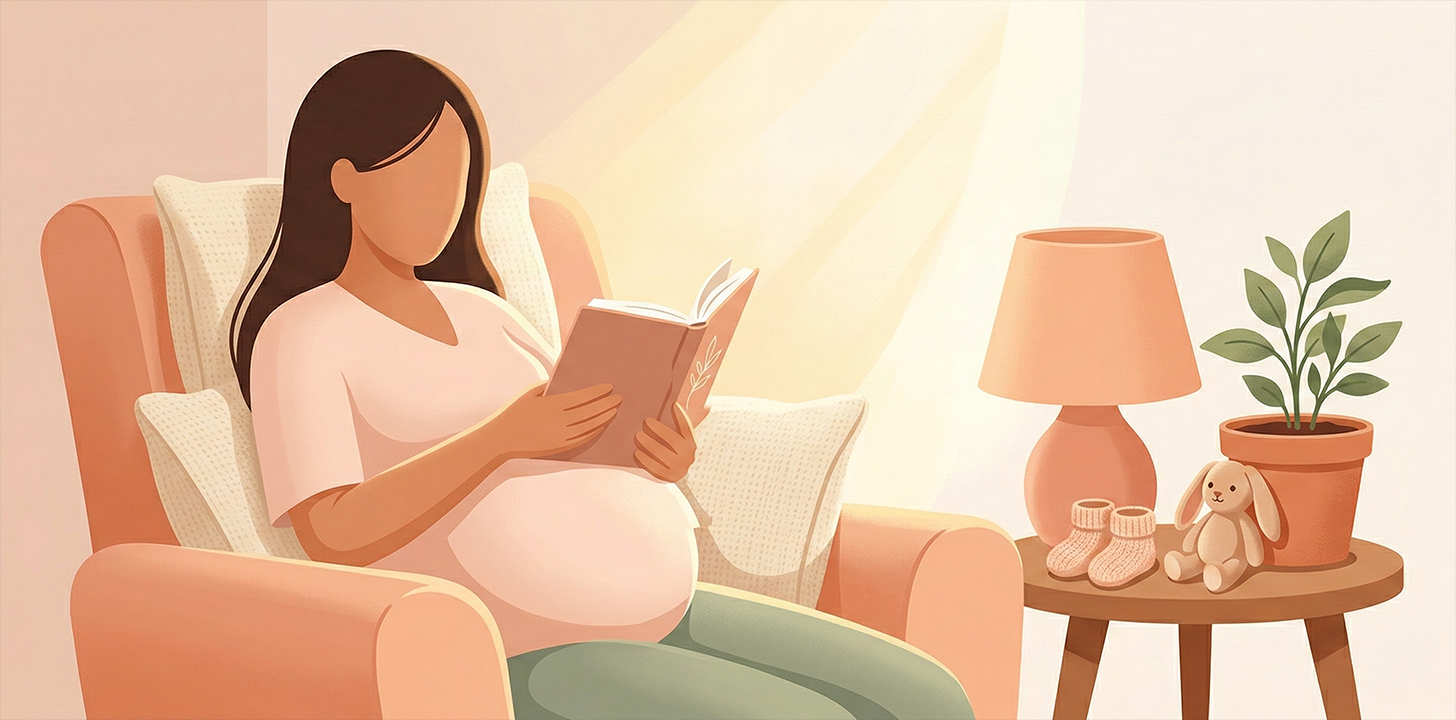
Journal Prompts for Pregnancy
Prompts to capture this extraordinary chapter | the fears, the joy, all of it.
Prompts to capture this extraordinary chapter | the fears, the joy, all of it.
Pregnancy is one of the few experiences that can feel like everything at once: awe and terror, love and grief, certainty and complete disorientation. If you've found yourself lying awake at 2am with thoughts too big to hold, or crying at a diaper commercial and then laughing at yourself for it, or sitting quietly in wonder at what your body is doing, you already understand why pregnancy journaling matters. It's not about documenting milestones for a baby book. It's about making sense of one of the most significant transformations a person can go through.
The physical changes of pregnancy are well-documented. The emotional terrain is far less mapped. In a culture that celebrates pregnancy with baby showers and gender reveals, there's not always room for the ambivalence, the fear, the complicated feelings that coexist with genuine excitement. A journal is one of the few places where all of it is welcome, where you can write "I am so happy and I am so scared" in the same sentence without anyone telling you to focus on the positive.
Research supports what many pregnant people intuitively know: journaling helps. A 2019 study published in Midwifery found that reflective journaling during pregnancy improved emotional wellbeing and helped participants process the identity shift of becoming a parent. Dr. James Pennebaker's landmark research at the University of Texas at Austin established that expressive writing about emotionally significant experiences reduces stress, improves mood, and supports physical health, all of which matter enormously when your body is doing the work of building a person.
These journal prompts for pregnancy are organized to follow the arc of the experience, from the body changes that begin immediately to the fears about birth, the early letters to a person you're still imagining, the shifting dynamics with your partner and family, and the practical and emotional preparation that the last trimester demands. They also include prompts about the postpartum period, because the journey doesn't end when the baby arrives, and many people find themselves wishing they had thought about those weeks earlier.
If pregnancy anxiety is particularly heavy for you right now, our journal prompts for anxiety offer additional tools for working through worry. If you're finding it hard to extend patience and gentleness to yourself during this demanding time, self-love journal prompts may feel like a necessary companion. And when you want to anchor yourself in what is already good and present, our gratitude journal prompts offer a grounding practice you can return to throughout pregnancy and beyond.
You don't need to write every day. You don't need to answer every prompt in full. Some days, a single sentence is enough: "Today I felt the baby move and I sat very still for a long time." That sentence, written and saved, becomes something irreplaceable. Start wherever you are. There is no wrong entry.
Pregnancy asks you to hold contradictions that have no resolution: you are becoming a parent while still being yourself. You are attached to a person you haven't met. You are certain about a future you cannot predict. Journaling doesn't resolve these contradictions, but it gives you a place to sit with them without pretending they don't exist.
Psychologist Daniel Stern coined the term "matrescence" in the 1970s, describing the developmental process of becoming a mother as profound as adolescence. Anthropologist Dana Raphael built on this concept, and contemporary researchers like Dr. Aurélie Athan at Columbia University have expanded the framework to include all new parents regardless of gender. The point is this: pregnancy is not just a physical process. It is a reshaping of identity, relationship, and self-conception. Journaling is one of the most effective tools for making that shift consciously rather than being swept through it unaware.
Prenatal anxiety affects an estimated 15 to 20 percent of pregnant people and is consistently underdiagnosed compared to postpartum depression, even though anxiety during pregnancy significantly predicts anxiety after birth. Writing about specific fears, rather than letting them circulate unexamined, activates the prefrontal cortex and reduces the amygdala's alarm response. Dr. Matthew Lieberman's neuroimaging research at UCLA demonstrated this effect clearly: labeling emotions in writing measurably calms the brain's threat-detection system. When you write "I am afraid that something will go wrong at the birth," you create distance from the fear that makes it more manageable.
Pregnancy is full of details that feel unforgettable in the moment and are gone six months later: the exact morning you first felt nauseous, the conversation with your partner about names, the way it felt to hear the heartbeat for the first time. A journal captures these not as facts but as experiences, with all their texture and emotional truth. Many parents describe rereading their pregnancy journals years later as one of the most meaningful things they own.
Writing letters to your baby during pregnancy, one of the most instinctive things many pregnant people find themselves doing, is also one of the most meaningful. These letters do two things: they help you begin to see your child as a real person with a developing personality, which deepens attachment, and they create something you can share one day, a record of being known and anticipated before you were born.
The prompts below are organized into five categories that follow the emotional arc of pregnancy. Body and Changes helps you witness and process the physical transformation with honesty and, when possible, with compassion. Hopes and Fears creates space for the full emotional spectrum of pregnancy, because both exist and both deserve acknowledgment. Letters to Baby invites you to begin the relationship before birth, capturing who you are and who you hope to be as a parent. Partnership and Family addresses the relational shifts that pregnancy sets in motion. And Preparing and Reflecting moves toward the birth and beyond, including the postpartum period that is part of the same continuous experience.
You don't need to work through these in order. Start with the category that matches where you are today, or use the generator to receive a single prompt when you need a place to begin. Trust yourself to find the right prompt for the right moment. Some entries will be three sentences. Some will go on for pages. Both are exactly right.
Pregnancy transforms the body in ways that are simultaneously mundane and extraordinary. Nausea, fatigue, a changing shape, movements from within: these physical experiences are the texture of the experience, and they are worth capturing with honesty. These prompts invite you to be a witness to your own body without performing gratitude for changes that are hard, and without minimizing the wonder of what is also genuinely astonishing.
This is a good starting place because it asks for observation without judgment. You are simply reporting what is, not evaluating how you feel about it. This creates a baseline entry you'll be grateful for later.
This is deliberately one of the more open-ended body prompts. There is no correct answer. If the answer is complicated or negative, that is a valid and important thing to document.
Pregnancy contains the full range of human emotion compressed into nine months. Joy and terror are not opposites here; they are companions. These prompts make space for the fears that don't get spoken at baby showers and the hopes too fragile to say out loud. Writing about both, without ranking them or resolving them, is one of the most honest things you can do during this time.
The quiet fear is usually the most important one. Writing it down takes it out of the echo chamber of your own mind and makes it something you can look at more clearly. This prompt will often yield a longer entry than expected.
Pregnancy loss is not only loss of a baby. It is also possible to grieve a version of your life, your relationship, or your body even in the middle of a wanted pregnancy. This prompt makes room for that complexity without pathologizing it.
These prompts invite you to write directly to your child, to the person you are already beginning to know. These letters do not need to be polished or wise. They can be funny, tentative, overwhelmed, full of love that doesn't yet have an object. They are a record of being anticipated, of being thought about before you arrived, and that record is one of the most profound gifts you can give.
This is one of the most practical and meaningful entries you can write. Your child will one day be curious about who you were before they existed. Answering that question now, while the details are present and specific, is a remarkable gift.
Pregnancy doesn't happen in isolation. It unfolds inside relationships, and those relationships shift in response to it. These prompts address the people in your orbit: your partner if you have one, your own parents, your friendships, the family you came from and the one you are building. Writing about these dynamics honestly is some of the most useful work you can do before your baby arrives.
The division of parenting labor, both visible and invisible, is one of the leading sources of postpartum relationship strain. Writing about your assumptions and expectations during pregnancy, not after birth, gives you a much better chance of having an honest conversation before the crisis point.
The final stretch of pregnancy is full of both practical preparation and the particular emotional weight of approaching a threshold. But reflection matters throughout, not just at the end. These prompts help you look back at the journey, look forward to the birth and beyond, and think honestly about the postpartum period that is part of this same continuous experience. Writing now, while you have some cognitive bandwidth, may be one of the best things you do for your future self.
This is the most practically useful prompt in this category. The person who reads this letter will be a different version of you, sleep-deprived and in the middle of a transition you cannot fully imagine from here. Write to her with real care.
Postpartum mood disorders affect up to one in five new parents and are significantly more manageable when anticipated. Writing your fears about the postpartum period is not inviting them. It is preparing yourself to recognize them and ask for help if they arrive.
Pregnancy journaling has its own rhythms and challenges. Here is how to make it work for the specific shape of this experience.
1. Journal by trimester if structure helps. The first trimester is often about shock, secrecy, nausea, and the surreal quality of a life change that you can't yet see. The second trimester tends to bring energy, visibility, and the beginning of real connection. The third brings anticipation, physical intensity, and the approach of a threshold. Your journal can follow this arc, with different categories of prompts feeling more relevant at different stages.
2. Write the uncomfortable things too. Ambivalence about pregnancy, fear of losing yourself, complicated feelings about your changing body, worry about your relationship, uncertainty about whether you made the right choice. These are common experiences that rarely get spoken aloud. Your journal is the safest place for them. Writing the difficult feelings doesn't make them more real or more true. It makes them less powerful.
3. Keep it accessible for the 3am moments. Pregnancy disrupts sleep early and often. The thoughts that arrive at 3am are often the most honest ones. A phone-based journaling app means you can write without turning on a light, without waking your partner, without getting up. If your journal is only accessible when you're sitting at a desk in daylight, you'll miss some of the most important entries.
4. Include the sensory details. What did the first kick feel like? What did the 20-week ultrasound room smell like? What was the exact wording of the text you sent to announce the pregnancy? These specifics are what transform a record into a memory. Future-you, and possibly your child one day, will be glad you didn't skip them.
5. Write about your partner and your family. Pregnancy changes every relationship in its orbit. Your journal is a place to process your feelings about your partner's response, your own parents' reactions, the friendships that shift. These relationship dynamics are as much a part of the pregnancy experience as the physical symptoms.
6. Don't wait for the perfect moment. Pregnancy is exhausting. There will not be a quiet, candle-lit evening when you feel perfectly ready to reflect. Write on your phone while you're waiting at the ob-gyn. Write five sentences before you go to sleep even if you're bone-tired. Write three words if that's what today allows. Incomplete entries are infinitely more valuable than no entries.
7. Think ahead to postpartum. The weeks after birth are often the hardest and the least documented, because new parents are too overwhelmed to write anything. Use your pregnancy journal to lay some groundwork: write about your hopes and fears for postpartum, write instructions to your future self, write about what kind of support you need and who can provide it. Those entries may become anchors when everything else feels unmoored.
Important: Journaling is a powerful support tool, but it is not a substitute for medical care, mental health support, or professional guidance. If you are experiencing significant anxiety, depression, or other mental health concerns during pregnancy, please reach out to your healthcare provider. Perinatal mood disorders are common, treatable, and nothing to be ashamed of.
Pregnancy is one of the most significant emotional and physical transformations a person can experience, and it moves fast. Journaling during pregnancy serves several purposes at once. It helps you process the identity shift of becoming a parent, which researchers like Dr. Aurélie Athan at Columbia University describe as a profound developmental change comparable to adolescence. It reduces prenatal anxiety by moving worries from your internal loop onto the page, where they become something you can examine rather than something that examines you. And it creates a record you cannot reconstruct later. The specific texture of early pregnancy, the ambivalence, the wonder, the fears, the conversations, fades faster than people expect. A journal preserves it with a fidelity that memory alone cannot.
Everything. The physical: what symptoms you have, when they hit, how your body is changing week by week. The emotional: the fears you don't say out loud, the hope that feels too fragile to name, the complicated feelings that coexist with genuine excitement. The relational: how your partnership is shifting, how your own parents are responding, which friendships have deepened and which have grown strange. Letters to your baby, written to the person you're still imagining. And your thoughts about the postpartum period, which many people wish they had prepared for more thoughtfully during pregnancy. There is no topic that is off-limits. A good pregnancy journal is honest above all else, and honesty includes the full range of what you're actually experiencing.
As early as possible, ideally from the moment you find out you're pregnant or even while you're trying to conceive. The first trimester is often the most emotionally turbulent and the least documented, because many people are keeping the pregnancy private and navigating symptoms alone. Those weeks are worth capturing even if you only have the energy for a few sentences. That said, there is no wrong time to start. Beginning in the second trimester, when energy often returns and the pregnancy becomes more visible, is common and completely valid. Beginning in the third trimester to prepare for birth and postpartum is also valuable. If your baby is already born and you haven't started yet, a postpartum journal is its own worthwhile thing. Start now, wherever now is.
It works through several mechanisms. Neurologically, writing about emotions reduces activity in the amygdala, the brain's threat-detection system, and increases engagement of the prefrontal cortex, shifting you from reactive to reflective mode. This is especially valuable during pregnancy, when hormonal changes can intensify the emotional response to uncertainty and worry. Psychologically, journaling builds narrative coherence: it helps you make sense of a fragmented, overwhelming experience by finding the through-line of your own story. Practically, it helps you identify what you need and what you're afraid of before those needs and fears show up as crises. And relationally, letters to your baby build attachment and connection to the person you're becoming a parent to, before you've met them face to face.
Think of three layers. The first is documentation: dates, symptoms, appointments, how far along you are, what your belly looks like, what you're craving or avoiding. This is the practical record. The second layer is emotional honesty: what you're feeling week by week, including the things that are hard to admit, the ambivalence alongside the joy, the fears alongside the hope. This is the most valuable layer and the hardest to reconstruct later. The third layer is letters and reflections: messages to your baby, letters to yourself for the postpartum period, reflections on your relationship and family dynamics. You don't have to write all three layers every time you journal. But the best pregnancy journals tend to include all three over time.
Yes, and this is one of the most well-supported applications of journaling. Prenatal anxiety is extremely common, affecting an estimated 15 to 20 percent of pregnant people, and it is consistently underdiagnosed. It also predicts postpartum anxiety and depression, making it important to address during pregnancy rather than waiting to see what happens after birth. Writing about specific fears, rather than letting them circulate in the background, activates the rational brain and reduces the alarm response. Structured prompts are particularly helpful for anxiety because they prevent the kind of open-ended worry spiral that can happen with unguided journaling. If pregnancy anxiety is significantly affecting your daily functioning, sleep, or ability to care for yourself, please reach out to a healthcare provider or mental health professional in addition to journaling. Our <a href="/prompts/anxiety">journal prompts for anxiety</a> offer additional tools specifically designed for working through worry.
Absolutely, and many perinatal mental health specialists would argue this is one of the most valuable things you can do. The postpartum period, particularly the first six weeks, is often the hardest stretch of new parenthood and the one people are least prepared for emotionally. During pregnancy you still have some cognitive bandwidth, some time, and some distance from the intensity of what is coming. Use that window to write honestly about your fears for postpartum, to think through your support network, to write a letter to yourself that you can open in those early weeks. Postpartum mood disorders affect up to one in five new parents. Writing about them during pregnancy doesn't invite them. It prepares you to recognize them and ask for help if they arrive.
The best pregnancy journal app is one that is always with you, because pregnancy generates thoughts at 3am and in waiting rooms and in the middle of a sleepless night when you don't want to turn on a lamp. Look for an app with daily prompts so you never face a blank page, privacy features so you can write honestly without worrying about who might read it, and a calm, low-friction interface that makes opening it feel easy rather than effortful. Reminders help with consistency, and the ability to read back your older entries matters more for pregnancy than for most other journaling, since you'll want to see the arc of the experience once it's over. Seedlit was built with exactly this kind of reflective, emotionally honest journaling in mind, with curated prompts organized by topic, a private and secure writing space, and a design that makes it feel like opening a journal rather than an app.

Seedlit is a free journaling app with daily prompts, mood tracking, and a plant that grows when you write. No account needed.

Available on iOS. Android coming soon.
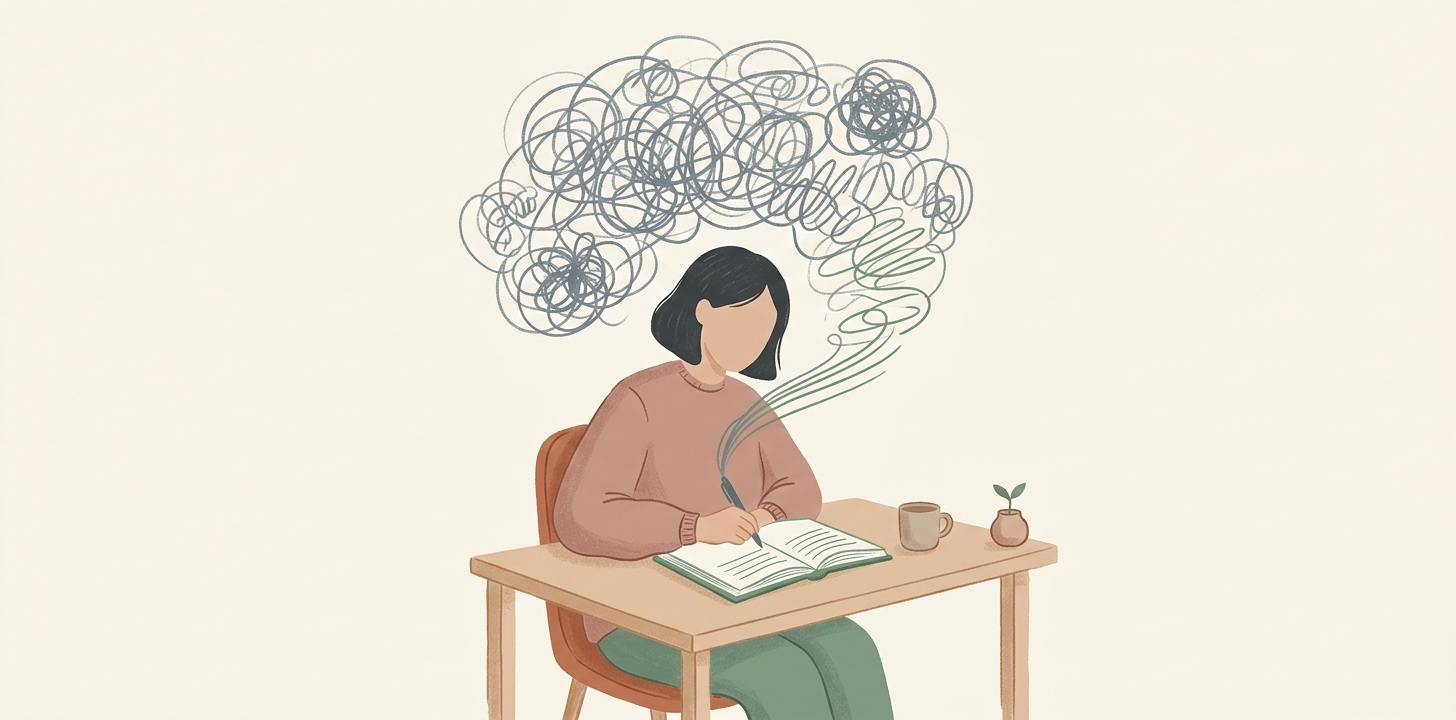
Prompts to help you sit with anxious thoughts and write through them.
→
Prompts to build genuine self-compassion | beyond affirmations.
→
Daily prompts to help you notice the good | even on hard days.
→
Start your day with intention. Five minutes of writing that changes everything.
→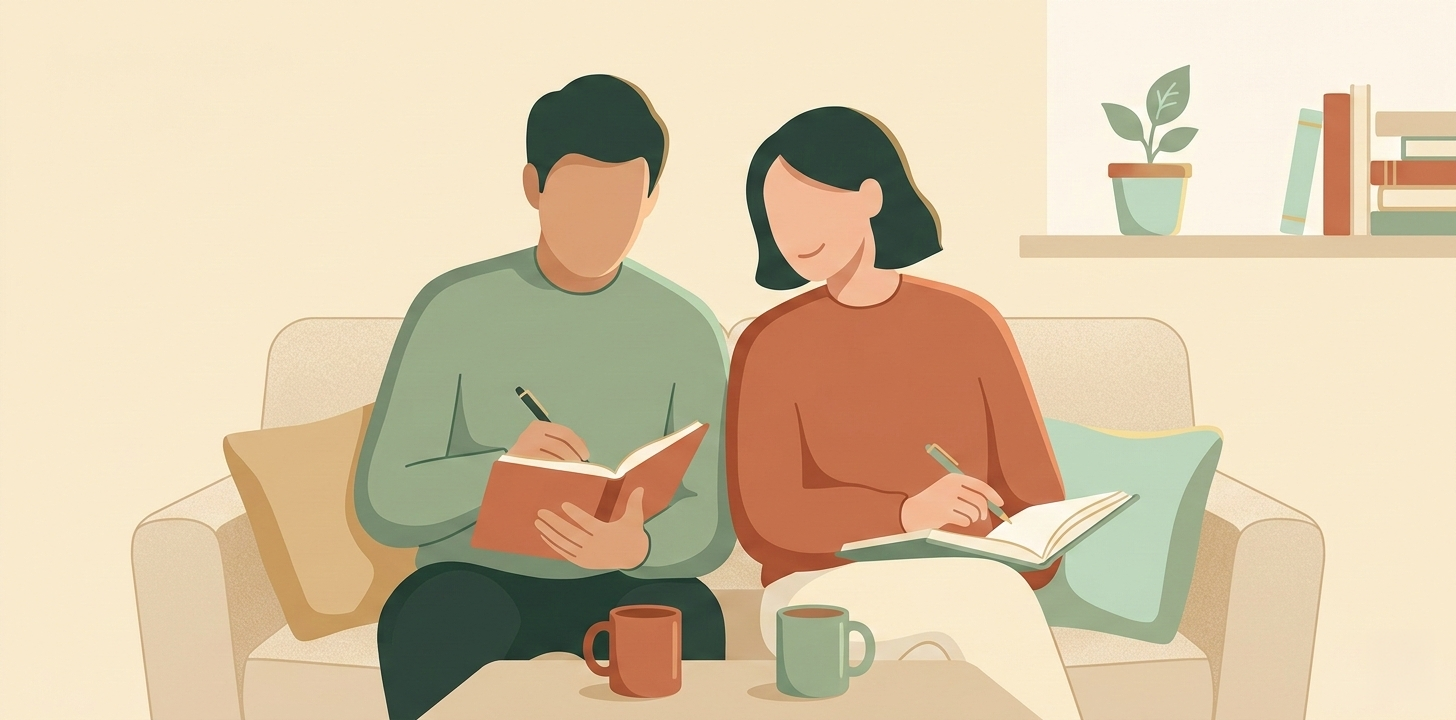
Prompts to help you and your partner connect, communicate, and grow together.
→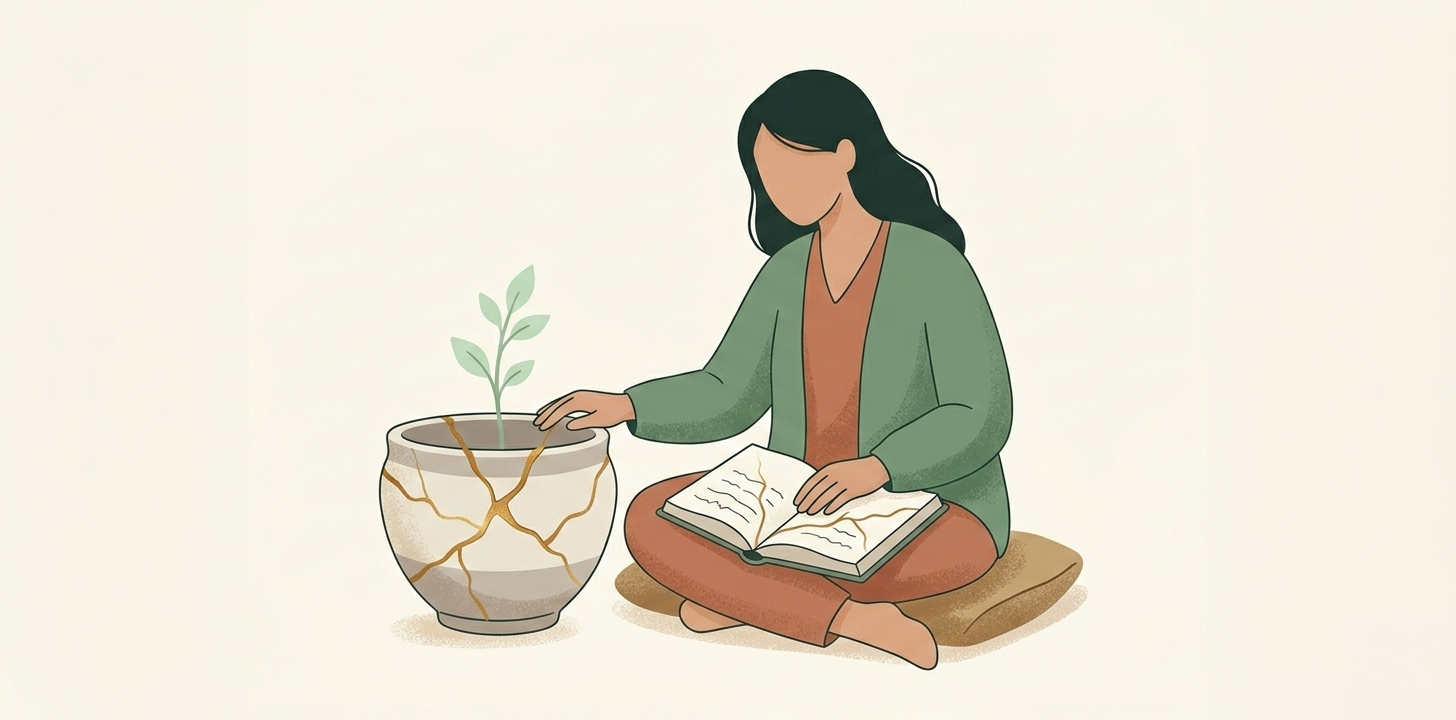
Prompts for emotional healing | processing pain and finding your way forward.
→