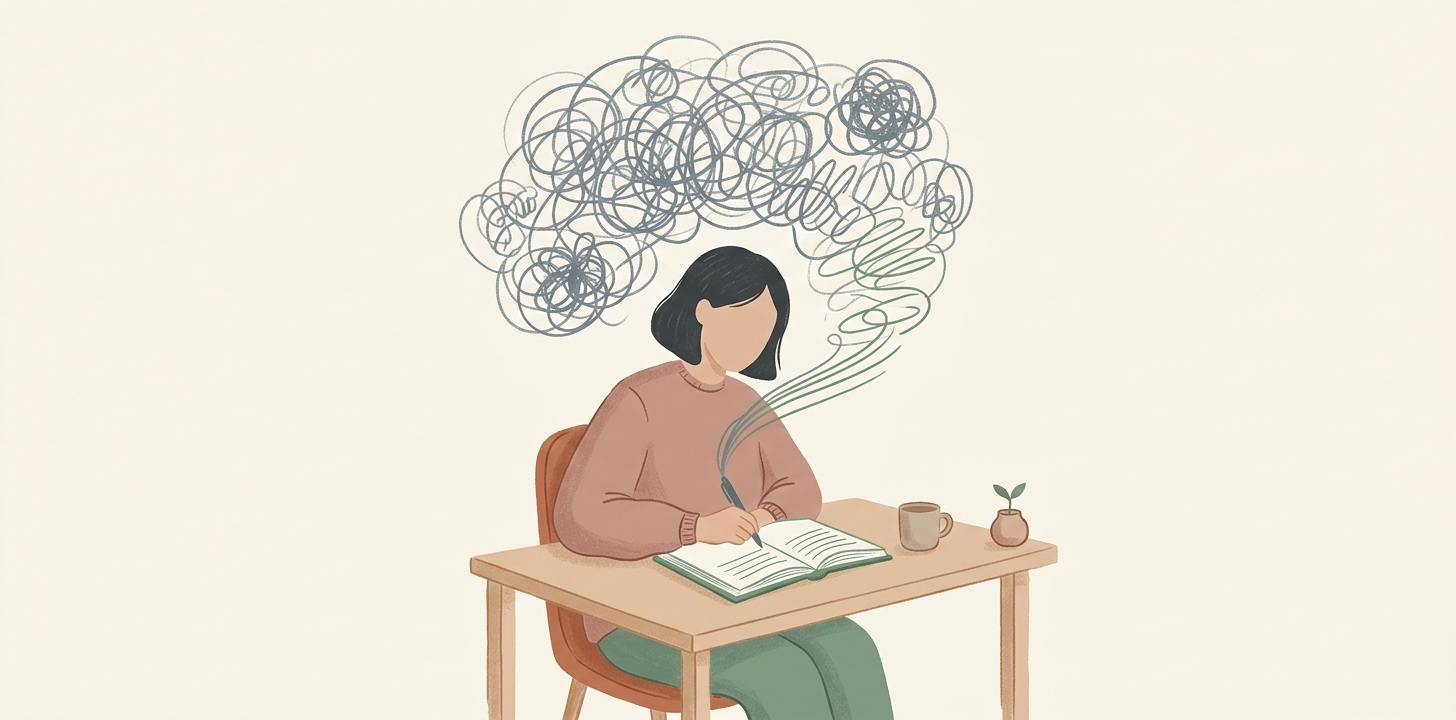
Cognitive Distortions Worksheet
Learn to recognize the 10 most common cognitive distortions and practice catching them in your own thinking.
Learn to recognize the 10 most common cognitive distortions and practice catching them in your own thinking.
Think of a recent negative thought or self-critical statement that bothered you.
Review the 10 common cognitive distortions below. Select any that apply to your thought.
Now that you've identified the distortion, let's challenge it.
Create a more balanced, realistic version of the original thought.
Cognitive distortions are systematic patterns of biased thinking first identified by psychiatrist Dr. Aaron Beck and later expanded by Dr. David Burns in his influential book Feeling Good: The New Mood Therapy. These thinking patterns are a central concept in Cognitive Behavioral Therapy (CBT) and are present to some degree in everyone's thinking.
The key insight is that cognitive distortions feel true even when they aren't. When you're anxious, 'I'm going to fail' feels like a fact, not a prediction. When you're depressed, 'Nothing ever works out' feels like an accurate summary of your life. Identifying these distortions doesn't make the feelings disappear, but it creates space between the thought and your reaction to it.
This worksheet walks you through the process of catching a distortion, examining the evidence, and building a more balanced perspective. With practice, you'll start noticing distortions in real-time | that's when the technique becomes most powerful.
Start with a specific thought. Don't try to analyze your general mindset | pick one specific negative thought from a recent experience.
Use the checklist honestly. Most negative thoughts contain multiple distortions. Don't stop at the first one you find.
The evidence exercise is key. Forcing yourself to list evidence both for and against a thought is the core CBT technique. Take your time with this step.
The reframe doesn't have to be positive. A balanced thought isn't 'Everything is great!' | it's a realistic, nuanced perspective that accounts for both the difficult and the okay parts of reality.
This worksheet is based on CBT principles and is for educational purposes. It is not a substitute for professional therapy.
Cognitive distortions are automatic, biased patterns of thinking that distort reality in predictable ways. They were identified by Dr. Aaron Beck and Dr. David Burns as a key mechanism in anxiety and depression. Common examples include catastrophizing, all-or-nothing thinking, and mind reading.
Yes. Cognitive distortions are a normal part of human thinking. Everyone engages in them to some degree. They tend to become more frequent and intense during periods of stress, anxiety, or depression. The goal isn't to eliminate them but to notice and challenge them.
You can't stop them entirely, but you can learn to recognize and challenge them. Regular practice with exercises like this worksheet builds a habit of noticing distorted thoughts and testing them against reality. Over time, distortions lose their grip.
Research suggests that overgeneralization and catastrophizing are among the most common. However, different people tend to have different 'signature' distortions. This worksheet can help you identify which patterns are most prevalent in your thinking.

Seedlit delivers daily reflective prompts that help you notice thinking patterns and build self-awareness. Free on iOS.

Available on iOS. Android coming soon.

Identify and challenge automatic negative thoughts with the gold-standard CBT technique.
→
Build a personalized toolkit for managing anxiety triggers, symptoms, and coping strategies.
→
A gentle, structured approach to understanding depression and building small coping steps.
→